Water Damage Restoration in Madison, AL
Madison Water Damage Restoration helps property owners address unwanted water from plumbing failures, appliance leaks, roof intrusion, overflows, flooding, and other indoor water-loss situations. Services include water extraction, removal of affected materials when appropriate, moisture assessment, and structural drying for residential and commercial properties throughout Madison and surrounding North Alabama communities.
Need Water Damage Cleanup in Madison, Alabama?
Water damage restoration is the process of removing unwanted water, extracting moisture from affected materials, and drying a property back toward safe moisture levels after a leak, overflow, or flooding event. Madison Water Damage Restoration handles water removal, moisture assessment, and structural drying for homes and businesses in Madison, AL. Call (256) 588-8480 to request service.
Common Water Damage Problems in Madison, Alabama
Indoor water damage in Madison rarely stays where it first appears. A leak that looks confined to one corner of a room can quietly travel beneath flooring, behind baseboards, and into wall cavities while the surface seems only damp. Recognizing the early signs helps property owners act before moisture spreads further.
Standing water is the most obvious symptom, but many water-loss situations begin far more subtly. A slow plumbing leak behind a cabinet can saturate drywall and baseboards for days before any visible water appears on the floor. By the time discoloration, swelling, or a musty smell develops, moisture has often migrated well beyond the original source.
Common warning signs Madison property owners should watch for include wet or cupping flooring, soft and discolored drywall, swollen baseboards, dampness around cabinets and fixtures, ceiling staining, and persistent humidity in a room that had a known leak. Discoloration along the bottom of walls often points to water wicking upward through drywall or pooling behind trim.
Because water follows the path of least resistance, it moves under flooring edges, through wall plates, and into concealed cavities. The visible puddle is frequently only a fraction of the total moisture present in the structure.
What Sources Cause Indoor Water Damage?
Plumbing failures, burst pipes, appliance leaks, water heater ruptures, washing machine overflows, toilet backups, HVAC condensate drain clogs, roof leaks, and storm-driven water intrusion are among the most common causes. Each source carries different contamination concerns and affects different materials, which is why the cleanup approach is tailored to the situation rather than applied identically to every loss.
How Water Damage Restoration Works Near Madison
Madison Water Damage Restoration approaches each loss based on the source of water, the materials affected, the level of contamination, and how far moisture has migrated. The appropriate restoration approach depends on these factors, and not every property requires every step.
- 1
Identify the Water Source and Affected Areas
When safe and possible, confirm whether water is still entering and locate the areas showing visible water or moisture. Understanding the source helps determine the right cleanup path.
- 2
Evaluate Visible and Hidden Moisture
Moisture meters and thermal inspection help map the extent of water beyond what is visible, checking beneath flooring, behind walls, and inside cavities that surface inspection alone would miss.
- 3
Remove Standing or Excess Water
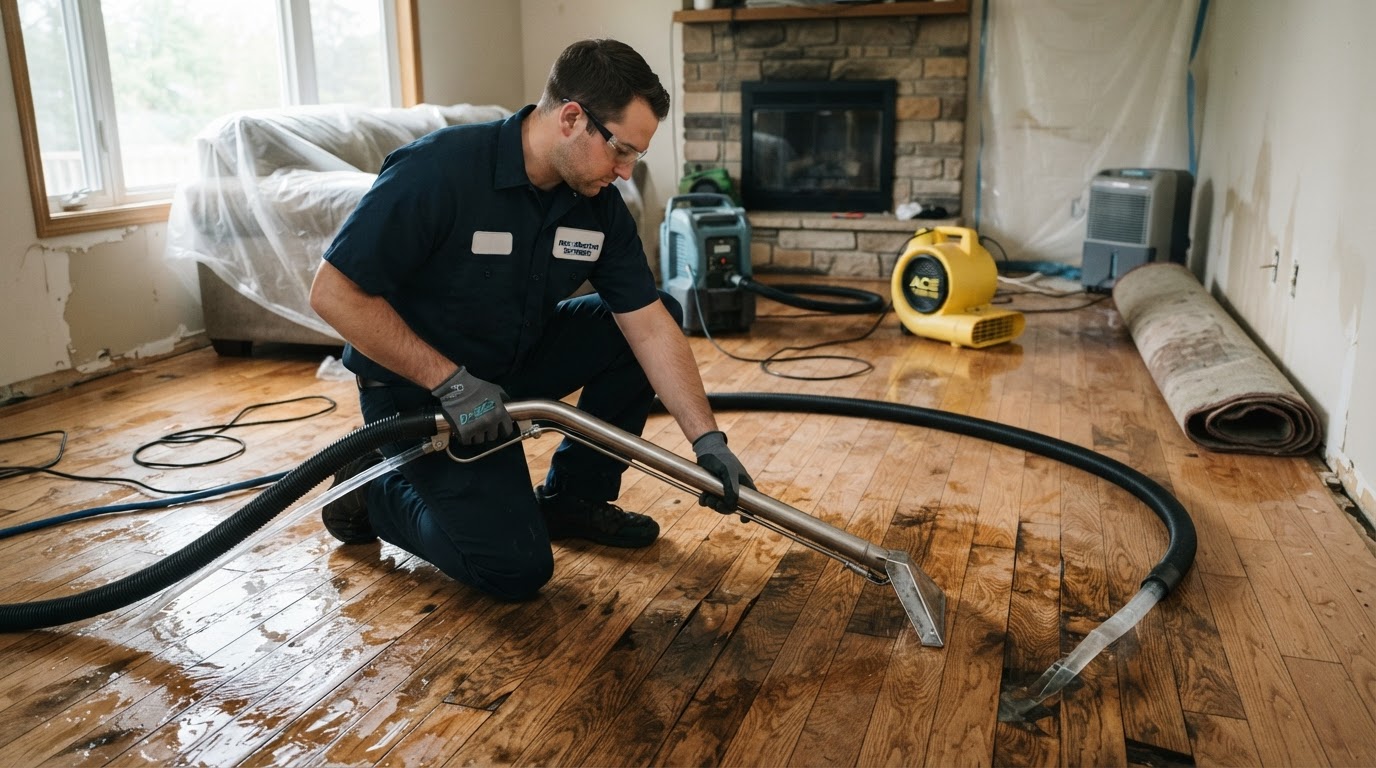
Extraction equipment pulls standing water from carpets, hard flooring, and concrete. Removing bulk water quickly is one of the most effective early steps.
- 4
Evaluate Wet Materials
Some materials can be dried in place; others that are saturated or contaminated may need removal. Decisions depend on material type, contamination category, and length of exposure.
- 5
Position Drying and Dehumidification Equipment
Air movers and dehumidifiers are placed to encourage evaporation from wet materials while dehumidifiers pull moisture out of the air so it does not reabsorb.
- 6
Monitor Moisture Conditions
Moisture readings are tracked over the drying period and equipment is adjusted as materials dry at different rates.
- 7
Complete Final Cleanup and Reassessment
Once moisture goals are reached, equipment is removed and the affected areas are reassessed before the process concludes.
Water spreading through your property?
Fast action can help reduce additional water damage. Call Madison Water Damage Restoration now for water removal and drying assistance.
Where Water Can Travel After a Leak
Surface dryness does not mean a structure is completely dry. Water that has migrated into hidden spaces can continue to affect materials long after the visible puddle is gone.
Under flooring, water travels along subfloor seams, beneath vinyl and tile edges, and into the gaps where flooring meets walls. Hardwood can cup and cupping may hide moisture trapped beneath the boards. Carpet and padding can hold large volumes of water even after surface extraction.
Behind walls, water enters through gaps around plumbing and baseboards, then wicks upward through drywall and into insulation. Wall cavities can stay damp for extended periods because air does not circulate freely inside them. Ceiling cavities below an upstairs leak can collect water that later appears as staining or soft drywall.
Cabinet toe kicks and the voids beneath built-in cabinetry are common hiding spots, because water pooling at the floor easily runs beneath cabinets where it cannot be reached by normal cleaning. Subflooring, insulation, and the framing behind walls can all retain moisture that ordinary drying does not address.
- Beneath hard flooring edges and along subfloor seams
- Behind baseboards and inside wall cavities
- Under cabinet toe kicks and vanity bases
- Into ceiling cavities below an upstairs leak
- Through insulation and along wood framing
- Into subflooring beneath finished floors
Related Water Damage Services
Water damage restoration is part of a connected cluster of water cleanup services. Depending on the source and extent of the loss, related services may be the more relevant starting point.
Water Extraction
Learn moreFlood Cleanup
Learn moreBurst Pipe Cleanup
Learn moreStructural Drying
Learn moreCommercial Restoration
Learn moreSpecialized Water Damage Problem Pages
Madison Water Damage Restoration serves property owners in Madison and surrounding North Alabama communities. Because many water-loss situations involve overlapping problems, the related services below are often part of a complete response. A burst pipe, for example, may require both water extraction and structural drying; a storm intrusion may call for flood cleanup as well as ceiling and wall drying.
Serving property owners in Madison and surrounding communities such as Huntsville, Athens, and Decatur, the company works across residential and commercial properties throughout the region. Links to additional service-area pages are provided below.
Water Damage Restoration FAQs
Direct answers to common questions about this service in Madison, Alabama.
Need Water Damage Restoration in Madison?
Fast action can help reduce additional water damage. Call Madison Water Damage Restoration now for water removal, water extraction, and structural drying assistance in Madison, Alabama and surrounding communities.