Flood Damage Cleanup in Madison, AL
Indoor flooding can come from storm-driven water intrusion, plumbing failures, overflows, or drain and fixture problems. Madison Water Damage Restoration provides flood water removal, affected-material evaluation, and structural drying for residential and commercial properties in Madison, Alabama and surrounding North Alabama communities.
Dealing With Flood Water Indoors in Madison?
Flood damage cleanup is the process of removing flood water from a property, evaluating affected materials, drying the structure, and addressing contamination when the water source may carry it. The approach depends on whether the water is from a clean source or potentially contaminated source. Call Madison Water Damage Restoration at (256) 588-8480 for flood cleanup in Madison, AL.
What Causes Indoor Flood Damage Near Madison?
Not every indoor flood comes from weather. While storms contribute, many floods originate from plumbing and fixture failures inside the property. Identifying the source matters because it determines contamination concerns and which materials can be saved.
Heavy water intrusion during storms can enter through roof openings, around windows and doors, and at ground level. Wind-driven rain and compromised flashing let water travel into ceilings and walls, sometimes appearing far from where it entered.
Plumbing failures are a frequent cause of indoor flooding. A burst supply line or a failed water heater can release dozens of gallons across multiple rooms within minutes. Overflows from fixtures, washing machines, and blocked drains can also flood confined spaces quickly.
Drain and fixture problems, including backed-up drains and failed connections, can send water across floors and into low areas. Because water flows to the lowest point, it often collects under cabinets, in closets, and along exterior walls before spreading further.
- Storm-driven rain and ground-level intrusion
- Burst pipes and supply-line failures
- Water heater and appliance ruptures
- Fixture and drain overflows
- Roof and flashing leaks during storms
- Blocked or backed-up drains
Flood Water Removal and Cleanup Process in Madison
Flood cleanup follows the water source and contamination level. The appropriate approach depends on where the water came from, how much entered, which materials are affected, and how long they have been wet.
- 1
Consider the Water Source and Contamination
Water from a clean source like a supply-line break is handled differently than water that may carry contamination, such as ground flood water or drain backups. The source shapes material decisions and safety steps.
- 2
Extract Standing Flood Water
Bulk water is removed with extraction equipment suited to the surface and volume. Faster removal limits how far moisture migrates into flooring, walls, and subfloors.
- 3
Evaluate Affected Materials
Flooring, drywall, baseboards, insulation, and cabinetry are assessed for saturation and contamination. Some materials may be dried in place; others may need removal.
- 4
Address Contamination When Relevant
When the water source may carry contamination, affected porous materials are evaluated for removal and affected areas are cleaned according to the situation.
- 5
Set Up Drying and Dehumidification
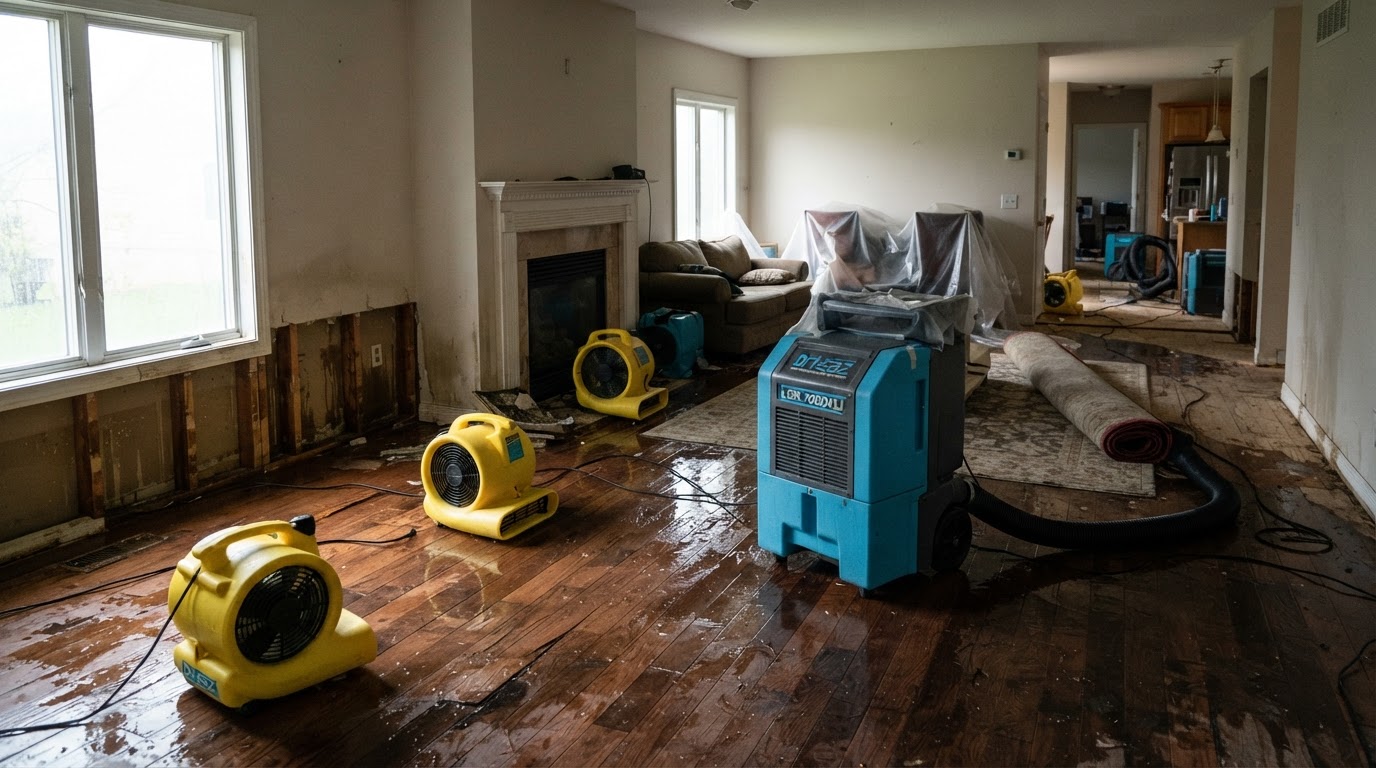
Air movers and dehumidifiers draw remaining moisture out of materials and the air. Equipment is placed based on the affected zones and adjusted as drying progresses.
- 6
Monitor and Complete Cleanup
Moisture is tracked over the drying period. Once moisture goals are reached, equipment is removed and the area is reassessed.
Water spreading through your property?
Fast action can help reduce additional water damage. Call Madison Water Damage Restoration now for water removal and drying assistance.
What Materials Can Be Affected by Flood Water?
Flood water reaches materials both visibly and invisibly. Understanding which materials hold water helps explain why drying continues after the visible water is gone.
Flooring is usually the first and most affected material. Carpet and padding can hold large volumes of water; hardwood may cup; vinyl, tile, and laminate can trap water beneath them against the subfloor. Subflooring beneath any finished floor can stay wet long after the surface is dry.
Drywall and baseboards absorb water from the floor upward. Lower wall sections and the areas behind baseboards are common hidden moisture spots. Insulation inside wall cavities can hold water that surface drying does not reach.
Cabinets, particularly their bases and toe-kick voids, collect water that runs beneath them and can stay damp because air does not reach inside. Furniture and contents in the affected area may also hold water or transfer moisture to flooring beneath them.
The length of exposure matters as much as the volume of water. Materials wet for only a short time are often better candidates for drying in place, while materials that stayed submerged longer may show swelling, staining, or softening that points to removal. This is one reason the cleanup approach is tailored to the situation rather than applied identically to every flood, and why the source, the contamination level, and the exposure time are all considered together.
- Carpet, padding, hardwood, and vinyl flooring
- Drywall, baseboards, and wall cavities
- Insulation inside framed walls
- Subflooring beneath finished floors
- Cabinet bases and toe-kick voids
- Furniture and contents in affected areas
Related Water Damage Services
Flood cleanup overlaps with several related services depending on the water source and contamination level.
Water Extraction
Learn moreStorm Damage
Learn moreStructural Drying
Learn moreSewage Cleanup
Learn moreRestoration
Learn moreSpecialized Water Damage Problem Pages
When flooding involves storm water, the storm and tornado water damage restoration page covers wind-driven rain and roof-related intrusion. When contamination may be present, sewage backup and black water cleanup addresses Category 3 water. Because flood water removal is closely tied to drying and the underlying source, these related services are often part of the same response. Madison Water Damage Restoration serves Madison and surrounding communities such as Decatur, Huntsville, and Athens.
The related services and service-area links below connect to the rest of the water damage cluster. Use Contact Us to request flood cleanup and Home to return to the main site.
Water Damage Restoration FAQs
Direct answers to common questions about this service in Madison, Alabama.
Dealing With Flood Water Indoors?
Flood water keeps migrating into flooring, walls, and subfloors the longer it sits. Call Madison Water Damage Restoration now for flood water removal and drying in Madison, Alabama and surrounding communities.