Storm & Tornado Water Damage Restoration in Madison, AL
Storms and high winds can drive water through roof openings, damaged flashing, and broken exterior components, sending water into ceilings, walls, and attics. Madison Water Damage Restoration provides storm water removal, moisture assessment, and structural drying for residential and commercial properties in Madison, Alabama and surrounding North Alabama communities.
Water Entering After a Storm in Madison?
Storm and tornado water damage restoration is the removal of water that entered a property through roof or exterior openings, assessment of moisture in ceilings, walls, and attics, and structural drying of affected materials. Madison Water Damage Restoration handles the water cleanup, not roof repair. Call (256) 588-8480 for storm water cleanup in Madison, AL.
How Storms Can Lead to Interior Water Damage
Storm-related water damage often enters far from where it is first noticed inside. Wind-driven rain and compromised exterior components let water travel through ceilings and walls before appearing as staining or soft drywall.
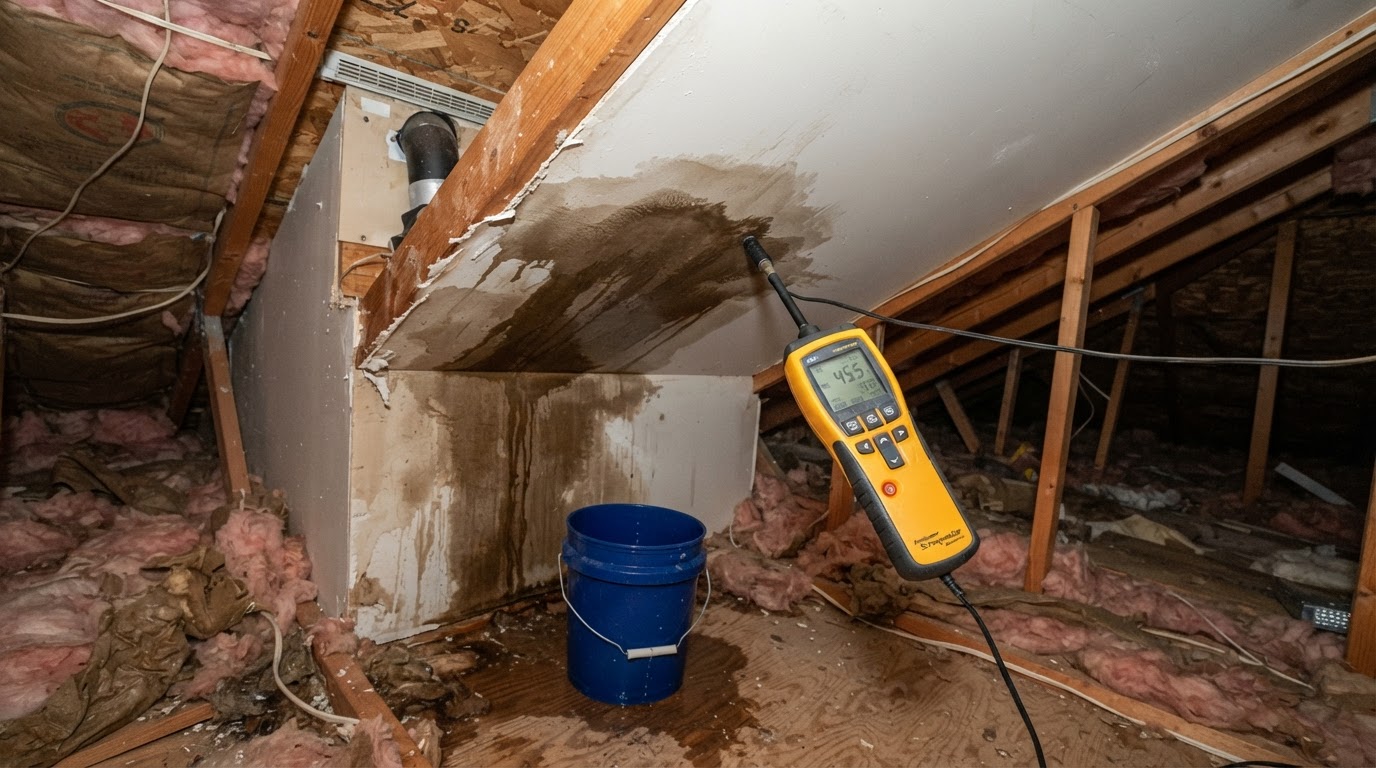
Roof openings from wind, fallen limbs, or damaged shingles let water enter the attic and travel along framing before appearing on the ceiling below. The visible ceiling stain may be some distance from the actual entry point, which is why the source is traced rather than assumed.
Damaged flashing around chimneys, vents, and roof penetrations is a common entry path for wind-driven rain. Water that slips past flashing can run down the inside of walls and collect at the wall plate before wicking into drywall and insulation.
Broken exterior components, including siding, vents, and windows, allow water to enter wall cavities directly. Ground-level intrusion during heavy storms can also send water into lower levels, crawl spaces, and the gaps around foundations.
- Roof openings from wind or fallen limbs
- Damaged flashing around chimneys and vents
- Broken siding, vents, and windows
- Wind-driven rain entering wall cavities
- Ground-level intrusion during heavy storms
- Water traveling through attics and framing
Storm Water Cleanup and Drying Near Madison
Storm water cleanup begins with safety and stabilizing the source. The appropriate approach depends on where water entered, which materials are affected, and how far moisture has migrated into ceilings, walls, and attics.
- 1
Address Safety and Source Stabilization
Avoid electrical hazards and structural concerns. Exterior openings and roof breaches are stabilized by the appropriate professionals so water is not still entering during cleanup.
- 2
Remove Standing Water
Any water that collected inside is extracted with equipment suited to the surface and volume, including water on flooring and in low areas.
- 3
Assess Moisture in Ceilings, Walls, and Attics
Moisture meters and inspection tools map how far storm water traveled into insulation, ceiling drywall, and wall cavities that surface inspection misses.
- 4
Evaluate Affected Materials
Wet insulation, ceiling drywall, and wall materials are assessed. Some are dried in place; saturated or contaminated materials may need removal.
- 5
Set Up Drying and Dehumidification
Air movers and dehumidifiers are positioned to dry affected materials, with attention to attics and wall cavities where storm water hides.
- 6
Monitor and Reassess
Moisture is tracked over the drying period and equipment is adjusted. The area is reassessed once moisture goals are reached.
Water spreading through your property?
Fast action can help reduce additional water damage. Call Madison Water Damage Restoration now for water removal and drying assistance.
Hidden Storm Moisture in Attics, Ceilings and Walls
Storm water is especially prone to hiding in concealed spaces because it often enters through the roof and travels along framing before reaching the living space below.
Attic insulation that absorbed wind-driven rain can hold moisture that the ceiling below does not show. Wet insulation is evaluated for drying or removal depending on the material and how saturated it is, because insulation that stays damp can keep nearby framing wet.
Ceiling drywall below a roof leak can absorb water and sag or stain even when the roof opening has been repaired. The cavity above the ceiling, between the drywall and the framing, can hold moisture that surface drying does not reach.
Wall cavities can receive water through damaged flashing and exterior openings. Because air does not circulate freely inside walls, moisture there dries slowly and can affect insulation and the back of drywall without any visible sign on the surface.
- Attic insulation that absorbed wind-driven rain
- Ceiling drywall and the cavity above ceilings
- Wall cavities reached through flashing damage
- Framing that stays wet near saturated insulation
- Insulation inside exterior walls
- Low areas and crawl spaces from ground intrusion
Related Water Damage Services
Storm water cleanup connects closely to roof, ceiling, and wall drying, to flood cleanup, and to the extraction and drying steps that follow.
Ceiling & Wall Drying
Learn moreFlood Cleanup
Learn moreWater Extraction
Learn moreStructural Drying
Learn moreBecause storm water often enters through the roof and travels into ceilings and walls, the roof leak, ceiling, wall, and hidden water damage page covers inspection and drying of those concealed spaces. When storms also cause ground-level flooding, flood damage cleanup addresses the water on floors. Serving Madison and surrounding communities such as Huntsville, Athens, and Decatur, the company coordinates these services as the situation requires.
The related services and service-area links below connect to the rest of the water damage cluster. Use Contact Us to request storm water cleanup and Home to return to the main site.
Water Damage Restoration FAQs
Direct answers to common questions about this service in Madison, Alabama.
Water Entering After a Storm?
Storm water travels through attics, ceilings, and walls before it is ever visible below. Call Madison Water Damage Restoration at (256) 588-8480 for storm water cleanup and drying in Madison, Alabama.