Sump Pump Failure & Water Cleanup in Madison, AL
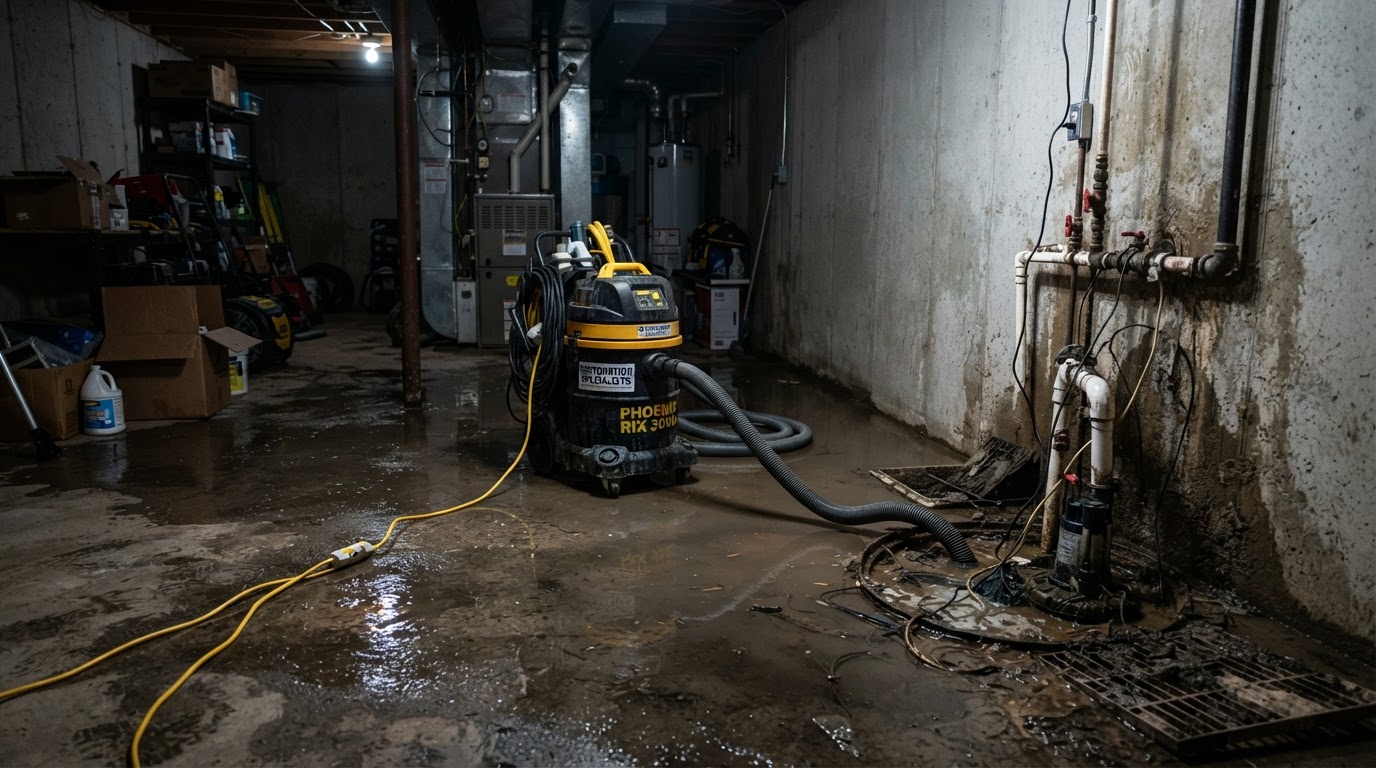
A failed, overwhelmed, or disconnected sump system can allow unwanted water to collect in a basement, crawl space, utility area, or other lower part of a property where a sump system is installed. Madison Water Damage Restoration provides standing water removal, moisture assessment, and structural drying after sump pump failures for properties in Madison, Alabama. Not every Madison property has a basement, sump pump, or crawl space, but for those that do, a malfunctioning system can leave water sitting against flooring, framing, drywall, and stored materials. Madison property owners can call (256) 588-8480 to request water cleanup assistance.
What Should You Do After a Sump Pump Failure?
Avoid entering standing water near energized electrical systems, stop incoming water if it can be done safely, and keep people away from the affected lower level. Contact an appropriate pump or plumbing professional for the mechanical issue, and arrange water removal and drying for the affected area. Madison Water Damage Restoration handles the water damage cleanup, not the pump repair. Call (256) 588-8480.
How Sump Pump Failures Can Lead to Water Damage Near Madison
When a sump system is present, a failure can let water accumulate in the lower part of a property faster than it can be removed. The cause of the mechanical failure is not diagnosed here, but several situations commonly contribute.
Power interruptions can stop a pump from running during the exact period it is needed most. A pump that has malfunctioned, a clogged intake or discharge line, a stuck float switch, or a system overwhelmed by more water than it can move can each allow water to collect in the sump pit and then spill across the surrounding floor. Discharge issues, where water is moved away from the pit but returns or backs up, can produce the same result. Not every property uses a sump pump, so these concerns apply specifically where one is installed.
Once water spills from the pit, it spreads across the lowest surface it can reach. In a finished lower level, that means wet flooring, damp drywall, saturated baseboards, and insulation that absorbs moisture. Stored items, framing, and crawl-space materials can all take on water even when the visible depth is shallow. Because water follows gravity, it pools in low spots and migrates outward along floor edges and into wall cavities before it is noticed.
The depth and duration of the water determine how far it migrates. A pump that fails for a short time may leave only surface moisture, while a longer failure can saturate flooring, the subfloor, and the framing that supports the finished space above.
- Power interruption to the pump
- Pump malfunction or stuck float switch
- Clogged intake or discharge line
- System overwhelmed by incoming water volume
- Discharge backup or return flow
- Water spreading across finished lower-level flooring
- Wet drywall, baseboards, insulation, and framing
- Moisture reaching stored contents and crawl-space materials
Can a Sump Pump Failure Cause Hidden Water Damage?
Yes. Water that spills from the pit can wick upward through porous materials and travel beneath flooring into the subfloor and along floor edges, even after the visible surface water is removed. Drywall and baseboards can absorb moisture from the bottom up, and insulation behind finished walls can hold water long after the floor looks dry. Because the affected area is a lower level, air circulation is often limited, which slows natural drying and allows moisture to persist in concealed spaces.
Sump Pump Water Removal and Structural Drying in Madison
Water cleanup after a sump pump failure moves from removing the standing water to finding where it has gone and then drying the structure. The appropriate restoration approach depends on the water source, water depth, materials affected, duration of exposure, and any contamination concerns. Not every property requires every step.
Because lower levels often have limited ventilation, dehumidification plays an outsized role. Removing the standing water is the first stage; structural drying addresses the moisture that remains inside building materials and in spaces that do not dry on their own. The pump or plumbing source is corrected by the appropriate professional so water is not still entering during cleanup.
- 1
Evaluate the affected areas
A walkthrough maps which parts of the lower level took on water, including finished areas, utility spaces, and any crawl-space materials, and identifies whether water is still present.
- 2
Consider the water source and contamination
Water from a sump pit may carry soil, sediment, or other contaminants depending on where it originated. The contamination level drives safety steps and material decisions.
- 3
Remove standing water
Extraction equipment pulls standing and excess water from the floor surface and low areas where it has collected. Extraction is the most efficient way to remove bulk water before drying begins.
- 4
Extract moisture from appropriate materials
Detail extraction addresses water from carpet and padding, flooring edges, and materials that have absorbed moisture from the bottom up.
- 5
Evaluate concealed moisture
Moisture meters check the subfloor, wall cavities, baseboards, and insulation to locate water a visual inspection would miss.
- 6
Set drying and dehumidification equipment
Air movers and dehumidifiers create controlled airflow and pull moisture from the air, drying framing, subfloors, drywall, and other materials.
- 7
Monitor drying conditions
Moisture conditions are checked over time until materials reach an appropriate dry standard, followed by final cleanup and reassessment.
Water spreading through your property?
Fast action can help reduce additional water damage. Call Madison Water Damage Restoration now for water removal and drying assistance.
Where Water Can Spread After a Sump Pump Failure
Water from a sump pump failure does not stay in one place. It migrates outward and upward through porous materials in ways a visual inspection often misses.
Floor edges and finished walls are usually affected first. Water travels along the perimeter where the floor meets the wall, into baseboards, and up into drywall through capillary action. Even a shallow depth of standing water can wick several inches up a wall before the floor looks dry. Wood framing that supports the finished floor can hold moisture against the subfloor above.
Insulation and flooring are common hidden reservoirs. Fiberglass or batt insulation behind finished lower-level walls absorbs and holds water against the framing, and finished flooring — especially wood, laminate, and carpet with padding — can trap water against the subfloor. Subfloor materials, where present, sit beneath the finished surface and dry slowly without airflow. Crawl-space materials and stored contents in the affected area may also take on water depending on the layout.
Water can wick upward through porous materials because of capillary movement, which means moisture travels against gravity through small channels in drywall, wood, and insulation. This is why the visible edge of the water rarely matches the true extent of the moisture, and why moisture meters are used to check beyond what the eye can see.
Is Sump Pit Water Considered Contaminated?
It depends on the source. Water that entered the pit from clear groundwater may be handled differently than water that may have picked up soil, sediment, or other contaminants. The source is evaluated to determine the appropriate safety steps and material decisions. When contamination is a concern, affected porous materials are evaluated for removal rather than simply dried, and the area is treated with added caution.
Related Water Damage Services
Sump pump water cleanup is part of a connected cluster of water damage services. Depending on the source and extent, related services may be the more relevant starting point.
Restoration
Learn moreWater Extraction
Learn moreFlood Cleanup
Learn moreStructural Drying
Learn moreRelated Water Damage Problems
Because sump pump failures often overlap with groundwater intrusion and broader lower-level flooding, the flood damage cleanup and water extraction pages cover larger-scale water removal, and the structural drying page covers the dehumidification process that follows. Madison Water Damage Restoration serves property owners in Madison and surrounding North Alabama communities, including Huntsville, Athens, and Harvest.
The related services, problem pages, and service-area links below connect to the rest of the water damage cluster. Use Contact Us to request sump pump water cleanup and Home to return to the main site.
Sump Pump Failure & Water Cleanup FAQs
Direct answers to common questions about this water damage problem in Madison, Alabama.
Need Water Cleanup After a Sump Pump Failure?
Water from a failed sump pump spreads across lower-level flooring and into walls and subfloors. Call Madison Water Damage Restoration at (256) 588-8480 for sump pump water cleanup in Madison, Alabama.