Crawl Space Water Damage & Structural Drying in Madison, AL
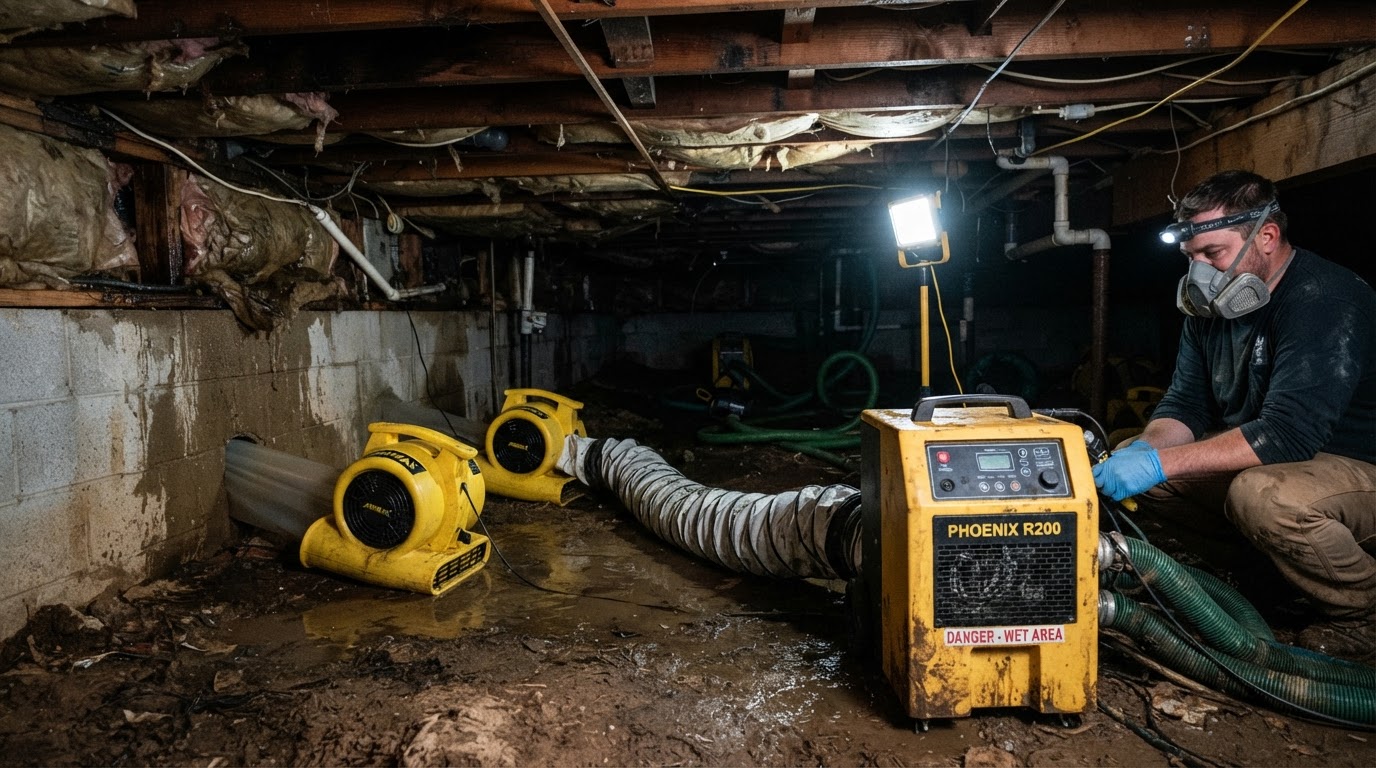
For homes or properties with crawl-space construction, water in a crawl space may affect the soil or ground covering, wood framing, floor joists, the underside of the subfloor, insulation, duct-adjacent materials, and foundation-area surfaces. Possible sources include plumbing leaks, groundwater intrusion, drainage issues, sump failures where applicable, storm water entry, and HVAC or plumbing condensation. Madison Water Damage Restoration provides standing water removal, moisture assessment, and structural drying for wet crawl spaces in Madison, Alabama. Not every Madison property has a crawl space, but for those that do, hidden moisture beneath the home can affect the structure above. Madison property owners can call (256) 588-8480 to request crawl space water cleanup.
What Should You Do If There Is Standing Water in a Crawl Space?
Do not enter an unsafe crawl space, and avoid any area where standing water may contact electrical or mechanical systems. Have the water source evaluated by the appropriate professional, and arrange water removal and drying for the affected framing, insulation, and subfloor. Madison Water Damage Restoration handles the water damage cleanup, not the drainage or plumbing repair. Call (256) 588-8480.
How Crawl Space Water Can Affect a Home
Water in a crawl space does not stay confined to the ground. It raises humidity, wets framing and insulation, and can affect the structure above.
Elevated moisture is often the first effect. Standing water or damp ground raises the humidity in the enclosed crawl space, which then affects the wood framing, floor joists, and the underside of the subfloor. Wet framing and wet insulation hold moisture against the structure, and the subfloor underside can absorb humidity even when no water directly touches it.
Odor development and moisture migration into upper materials can follow. Damp conditions in a crawl space can contribute to a musty odor, and moisture can migrate upward into the subfloor and the flooring above it. The drainage or plumbing source is corrected by the appropriate qualified trade while Madison Water Damage Restoration addresses the wet crawl-space materials.
The severity depends on the amount of water, how long it has been present, and the materials involved. A small amount of water caught early may mainly raise humidity, while standing water left for an extended period can saturate framing and insulation more deeply.
- Elevated humidity in the enclosed space
- Wet wood framing and floor joists
- Wet insulation against the structure
- Subfloor underside absorbing moisture
- Odor development
- Moisture migration into upper materials
Can Crawl Space Moisture Affect Flooring Above?
Yes. Moisture conditions beneath a floor can affect the underside of the subflooring and, depending on severity and duration, can contribute to moisture-related changes in the flooring above. The crawl space and the subfloor underside are checked together, because humidity and wet framing beneath a floor can affect the materials above even when the floor surface looks normal.
Crawl Space Water Removal and Structural Drying Near Madison
Cleanup moves from safe access and source consideration into standing water removal, material evaluation, and controlled drying. The approach depends on the water source, amount of water, materials affected, and duration of exposure. Not every property requires every step.
Drying is not promised without material removal, and insulation cannot always be saved. Depending on the water source and material condition, wet crawl-space insulation may need removal so the framing and subfloor beneath can dry. The source is corrected by the appropriate trade while the water damage cleanup proceeds.
- 1
Evaluate safe access
The crawl space is assessed for safe entry before anyone goes inside, with attention to standing water, electrical or mechanical systems, and structural conditions.
- 2
Consider the water source
The likely source — plumbing, groundwater, drainage, sump, storm, or condensation — is considered because it affects safety steps and material decisions.
- 3
Remove standing water when present
Extraction equipment removes standing water from the crawl space so it is not continuing to wet the framing, insulation, and ground covering.
- 4
Evaluate framing, subfloor, and insulation
Floor joists, the subfloor underside, insulation, and framing are checked with moisture meters to map the wet materials beneath the home.
- 5
Set drying and dehumidification equipment
Air movers and dehumidifiers are positioned to lower humidity and pull moisture from the framing, subfloor, and remaining materials.
- 6
Improve controlled air movement
Where appropriate, airflow is directed across wet framing and the subfloor underside to support drying of concealed surfaces.
- 7
Monitor moisture conditions
Moisture is checked over time in the framing, subfloor, and insulation until materials reach an appropriate dry standard.
- 8
Reassess materials
Wet materials are reassessed for salvage. Insulation and framing that cannot be effectively dried may need removal rather than continued drying.
Water spreading through your property?
Fast action can help reduce additional water damage. Call Madison Water Damage Restoration now for water removal and drying assistance.
Materials Commonly Affected by Crawl Space Water
A wet crawl space can affect several structural materials, many of which sit out of sight and can remain damp after the visible water is gone.
Floor joists and the wood framing beneath the home can absorb humidity and direct water, and the subfloor underside is especially vulnerable because it faces the crawl space. Insulation between the joists can hold moisture against the subfloor and framing, and support materials and duct-adjacent areas can take on water where condensation or leaks reach them.
Foundation surfaces and the ground covering can remain damp and continue to raise humidity if they are not dried. Stored materials in the crawl space, where present, can absorb water and hold moisture against the structure. Because the crawl space is enclosed and rarely visited, hidden moisture can go unnoticed for some time.
For these reasons, a crawl space can stay wet even after standing water is removed. Moisture meters check the framing, subfloor, and insulation over time rather than assuming the space is dry once the visible water is gone.
- Floor joists and wood framing
- Subfloor underside
- Insulation between joists
- Support materials
- Duct-adjacent areas
- Foundation surfaces and ground covering
- Stored materials where present
Can a Crawl Space Stay Wet Even After Standing Water Is Gone?
Yes. After standing water is removed, framing, insulation, and the subfloor underside can remain damp, and the enclosed space can hold humidity that keeps those materials wet. Moisture meters check the structure over time, because the absence of standing water does not mean the materials are dry. Drying continues until readings reach an appropriate dry standard.
Related Water Damage Services
Crawl space water damage cleanup is part of a structural-drying and hidden-water cluster that includes sump pump failures and under-floor moisture.
Structural Drying
Learn moreRestoration
Learn moreFlood Cleanup
Learn moreWater Extraction
Learn moreRelated Water Damage Problems
Because crawl-space water often connects to sump failures and under-floor moisture, the sump pump failure and water cleanup page covers lower-level standing water, and the slab leak and under-floor water damage page covers water beneath flooring. The broader structural drying and dehumidification page is the parent resource. Madison Water Damage Restoration serves Madison and surrounding communities such as Huntsville, Harvest, and Toney.
The related services, problem pages, and service-area links below connect to the rest of the water damage cluster. Use Contact Us to request crawl space water cleanup and Home to return to the main site.
Crawl Space Water Damage & Structural Drying FAQs
Direct answers to common questions about this water damage problem in Madison, Alabama.
Water or Excess Moisture in Your Crawl Space?
Crawl-space moisture can affect framing, insulation, and the subfloor above long after standing water is gone. Call Madison Water Damage Restoration at (256) 588-8480 for crawl space water damage and structural drying in Madison, Alabama.