Emergency Water Removal & Water Extraction in Madison, AL
When standing water is present, removing it quickly is one of the most effective early steps after a water loss. Madison Water Damage Restoration provides emergency-focused water removal and water extraction for residential and commercial properties in Madison, Alabama, using extraction equipment suited to the surface and amount of water involved.
Need Standing Water Removed in Madison, AL?
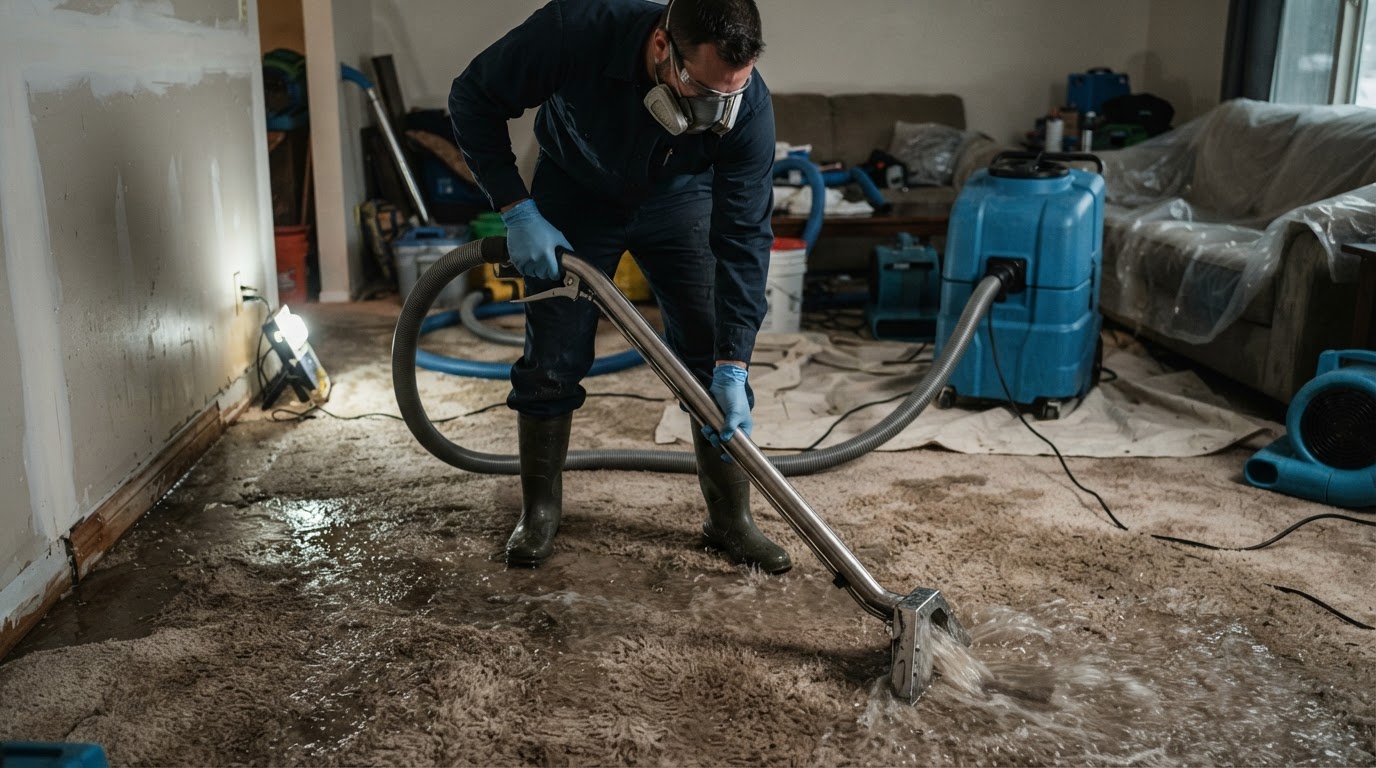
Water removal and water extraction are the steps of pulling standing or excess water out of a property using extraction wands, wet vacuums, and submersible pumps. Removing bulk water early helps limit how far moisture migrates into flooring, walls, and subfloors. Call Madison Water Damage Restoration at (256) 588-8480 to request water extraction in Madison, AL.
When Water Extraction Is Needed in Madison, Alabama
Extraction is called for whenever standing water or deeply saturated materials are present. The amount of water, the surface it sits on, and how long it has been there all shape the approach.
Standing water on hard flooring, carpet, or concrete is the clearest signal that extraction is needed. Even a shallow-looking pool can represent many gallons, and water sitting against baseboards and walls is already migrating into those materials.
Deeply saturated carpet and padding hold far more water than the surface suggests. When carpet squishes underfoot, water has reached the padding and often the subfloor beneath. Burst plumbing, water heater failures, appliance leaks, overflows, and storm intrusion can each leave large volumes of water across multiple rooms in a short time.
Extraction is also relevant when water has spread under flooring or into low areas. Water that flows to the lowest point in a room can collect under cabinets, in closets, and along exterior walls where it is not immediately visible.
- Standing water on carpet, hard flooring, or concrete
- Deeply saturated carpet and padding
- Water from burst plumbing or supply-line failures
- Water heater tank ruptures releasing large volumes
- Appliance leaks and washing machine overflows
- Storm intrusion and indoor flooding
How Professional Water Extraction Works
Extraction begins with assessing the water and the surfaces involved, then matching the equipment to the situation. The appropriate approach depends on the source, the amount of water, the flooring type, and whether water has migrated beneath surfaces.
- 1
Assess the Water and Affected Areas
Identify where water is visible and where it may have traveled, including under flooring and into adjacent rooms. The source and contamination level are considered before extraction begins.
- 2
Select Appropriate Extraction Equipment
Extraction wands and weighted tools work on carpet; wet vacuums handle hard surfaces; submersible pumps address deeper standing water. The right tool depends on the surface and depth.
- 3
Remove Bulk Standing Water
Pulling the majority of water out first is the fastest way to reduce how much moisture remains to be dried. This is typically the largest single step in the process.
- 4
Perform Edge and Detail Extraction
Water against baseboards, in corners, under cabinet toe kicks, and along seams is addressed so it does not continue migrating after the main pool is gone.
- 5
Check Moisture Beneath Surfaces
After visible water is removed, moisture meters confirm how much remains under flooring and in materials. Surface dryness alone does not mean extraction is complete.
- 6
Transition to Drying
Once bulk water is extracted, air movers and dehumidifiers are positioned to dry the remaining moisture held in flooring, walls, and the subfloor.
Water spreading through your property?
Fast action can help reduce additional water damage. Call Madison Water Damage Restoration now for water removal and drying assistance.
Why Water Removal Is Only the First Step
Extraction removes the water you can see and reach, but it does not remove the moisture held inside materials or hidden cavities. That remaining moisture is why structural drying follows extraction.
Subfloor moisture often remains after carpet and padding are extracted. Water that ran beneath flooring edges, along subfloor seams, and into the gap where flooring meets walls can stay wet long after the surface appears dry. Without drying, that trapped moisture continues to affect the materials above it.
Drywall and baseboards absorb water from the floor upward, even after standing water is gone. Wall cavities hold moisture because air does not circulate freely inside them, and humidity in the room can slow evaporation from wet materials. This is why dehumidification accompanies air movement.
Treating extraction as the whole job can leave hidden moisture behind. The goal of the combined process is to address both the visible water and the moisture that has migrated into the structure, so that drying can proceed effectively.
Is Water Extraction Different From Water Removal?
The terms are often used interchangeably, but extraction typically refers to the equipment-based process of pulling water out of carpets, padding, and surfaces, while water removal can describe the broader effort of getting standing and excess water out of the property. Both are early steps that precede structural drying.
Related Water Damage Services
Water extraction is the starting point for many water-loss situations, and it usually connects to drying and to the underlying cause of the water.
Restoration
Learn moreFlood Cleanup
Learn moreStructural Drying
Learn moreBurst Pipe Cleanup
Learn moreCommercial Restoration
Learn moreSpecialized Water Damage Problem Pages
Because extraction is one part of a complete response, related services are often involved in the same loss. A plumbing failure that left standing water may need burst pipe cleanup alongside extraction; a flood may call for flood damage cleanup followed by structural drying. Serving Madison and surrounding communities such as Huntsville, Athens, and Harvest, the company coordinates these services as the situation requires.
The related services and service areas below provide paths to the rest of the water damage cluster. Contact Us is available to request service, and Home returns to the main site.
Water Damage Restoration FAQs
Direct answers to common questions about this service in Madison, Alabama.
Need Standing Water Removed?
Standing water keeps migrating into your flooring, walls, and subfloor the longer it sits. Call Madison Water Damage Restoration now for water extraction and emergency water removal in Madison, Alabama.