Ceiling Water Damage & Wet Drywall Cleanup in Madison, AL
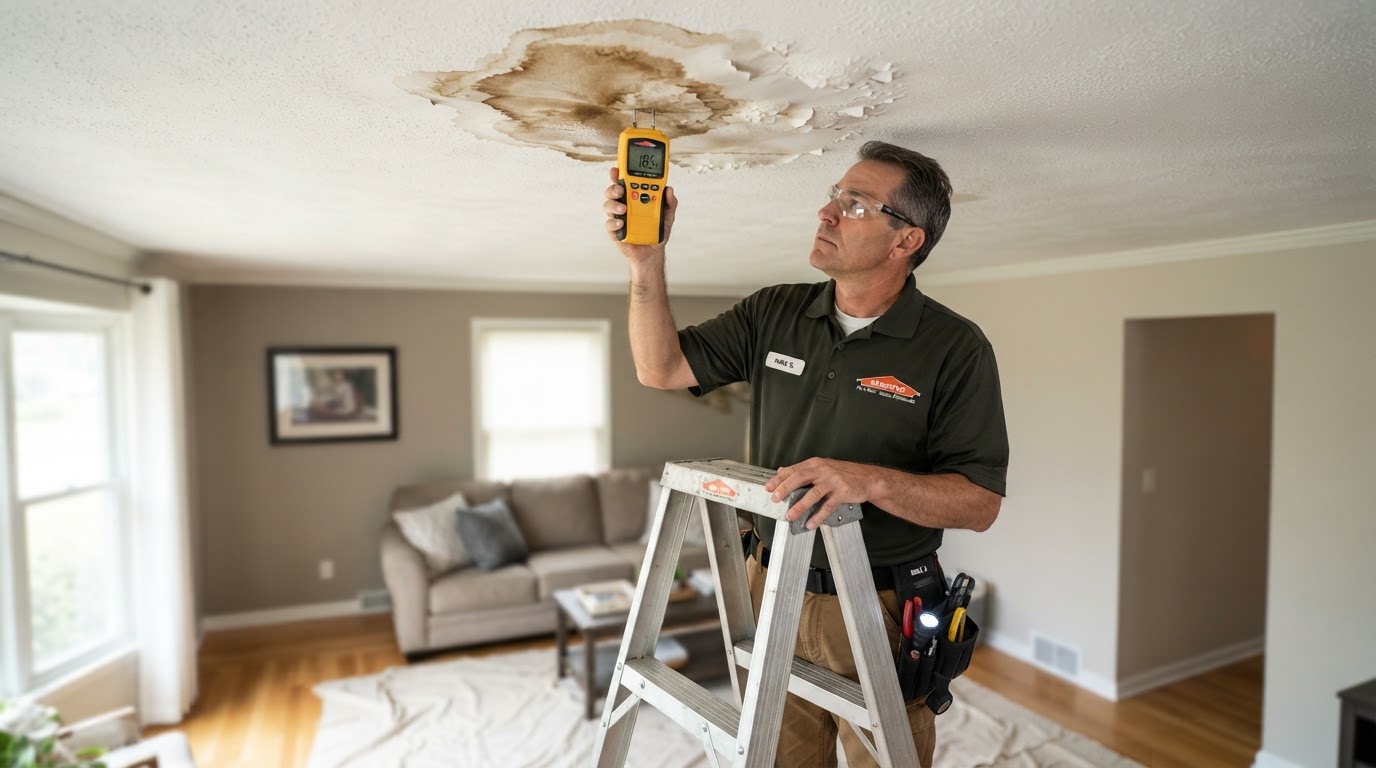
Ceiling water damage may result from roof leaks, plumbing leaks above, bathroom overflows, HVAC condensate problems, or appliance and supply-line leaks on an upper level. Common signs include staining, bubbling paint, soft or sagging drywall, damp texture, and localized discoloration. Madison Water Damage Restoration provides moisture assessment, water extraction where applicable, evaluation of affected materials, and structural drying for water-damaged ceilings in Madison, Alabama. Because water can travel across framing and drywall before a stain becomes visible, the full affected area is mapped before drying begins. Madison property owners can call (256) 588-8480 to request ceiling water damage cleanup.
What Should You Do If Water Is Coming Through the Ceiling?
Avoid standing beneath visibly unstable or sagging ceiling materials, and stay away from ceiling light fixtures when water is present. Stop the water source if it can be done safely, have the source corrected by the appropriate trade, and arrange a water damage evaluation and drying. Madison Water Damage Restoration handles the water cleanup, not the roof or plumbing repair. Call (256) 588-8480.
What Causes Ceiling Water Damage in Madison Properties?
Ceiling water damage almost always means water entered from above. The visible stain is often the last sign to appear, not the first.
Roof intrusion is a common source. A roof leak, damaged flashing, or wind-driven rain can allow water to reach the attic, insulation, and ceiling drywall before any discoloration shows in the room below. Upstairs plumbing leaks and bathroom overflows can send water through the floor assembly and into the ceiling of the room beneath. Pipe leaks inside ceiling cavities, HVAC condensate problems, and appliance or supply-line failures on an upper level can each introduce water from above.
The visible stain may not be directly below the original source. Water follows framing, drywall surfaces, insulation, and penetrations such as light fixtures, so it can travel some distance before it collects and becomes visible. A small stain near a light fixture can reflect a leak several feet away, and a ceiling that looks only slightly discolored may have wet insulation and framing above it.
Because the source sits above the visible damage, identifying it is the first step. The source is corrected by the appropriate qualified trade — a roofer, plumber, or HVAC professional — while Madison Water Damage Restoration addresses the water-damaged ceiling, insulation, and surrounding materials.
- Roof leaks and flashing failures
- Upstairs plumbing and pipe leaks
- Bathroom overflows on an upper level
- HVAC condensate problems
- Appliance and supply-line leaks above
- Water traveling from another area
Can Water Travel Across a Ceiling Before It Becomes Visible?
Yes. Water can move along framing members, across drywall surfaces, through insulation, and along penetrations before it collects enough to show as a stain. The visible discoloration may appear some distance from where the water actually entered, which is why moisture meters map the surrounding ceiling and the area above it rather than treating the stain as the full extent of the damage.
Ceiling Water Damage Cleanup and Drying Near Madison
Cleanup moves from source correction into moisture assessment, water removal where applicable, material evaluation, and controlled drying. The appropriate approach depends on the water source, contamination, extent of saturation, material condition, and duration of exposure. Not every property requires every step.
Wet ceiling drywall does not always require removal, and it cannot always be saved. Decisions depend on the water source, contamination level, extent of saturation, material condition, and how long the materials have been wet. Sagging or structurally compromised drywall is handled with care and may be removed, while drywall that has taken on limited moisture may sometimes be dried in place.
- 1
Identify or coordinate correction of the source
The active source is corrected by the appropriate qualified trade so water is not still entering during cleanup. Cleanup proceeds once the source is controlled.
- 2
Evaluate visible ceiling damage
The ceiling is inspected for staining, bubbling paint, soft or sagging drywall, and any dripping or pooling water. Unstable or sagging sections are treated with caution.
- 3
Check surrounding moisture
Moisture meters map the ceiling beyond the visible stain, the wall intersections, and the area above the ceiling to find the full extent of wet materials.
- 4
Address standing or dripping water where applicable
Water that has pooled above the drywall or is actively dripping is removed so it does not continue to saturate the ceiling and the room below.
- 5
Evaluate drywall and insulation
Ceiling drywall and the insulation above it are assessed. Some materials can be dried in place; saturated, sagging, or compromised drywall and insulation may need removal.
- 6
Remove unsalvageable materials when necessary
Materials that cannot be effectively dried, or where contamination is a concern, are removed to allow access to the framing and remaining structure.
- 7
Dry remaining structural materials
Air movers and dehumidifiers are positioned to dry the remaining drywall, framing, and ceiling cavity, with attention to concealed spaces above the ceiling.
- 8
Monitor moisture conditions
Moisture is checked over time until materials reach an appropriate dry standard, followed by final reassessment.
Water spreading through your property?
Fast action can help reduce additional water damage. Call Madison Water Damage Restoration now for water removal and drying assistance.
What Can Be Wet Above a Water-Damaged Ceiling?
The ceiling drywall is usually only the visible layer. Above it, several materials can hold water long after the surface looks dry.
Ceiling drywall itself absorbs water from above and from its edges, and the paper facing can bubble or separate. Insulation above the drywall, whether batt or blown, can hold moisture against the ceiling and the framing. Wood framing, joists, and the underside of roof decking can remain wet even when the drywall below has been dried.
Wall intersections and the top plates of walls can receive water that traveled along framing, so the moisture check extends into the adjacent wall cavities. Light fixture areas and other penetrations are common collection points where water moves through the ceiling assembly. Adjacent wall cavities can take on water that ran down framing from the original entry point.
Because these materials sit above and behind the visible ceiling, a surface that feels dry does not confirm the structure is dry. Moisture meters and, where appropriate, limited access are used to check the insulation, framing, and cavities above the ceiling before drying is considered complete.
- Ceiling drywall and its paper facing
- Insulation above the drywall
- Wood framing and joists
- Roof decking where exposed
- Wall intersections and top plates
- Light fixture and penetration areas
- Adjacent wall cavities
Can a Ceiling Look Dry While Moisture Is Still Above It?
Yes. The ceiling surface can look and feel dry while insulation, framing, and the drywall interior above it remain wet. Water that entered from above can sit in concealed materials and continue to affect the structure. Moisture meters check above and behind the visible ceiling rather than relying on appearance, because surface dryness does not confirm the full assembly is dry.
Related Water Damage Services
Ceiling water damage cleanup is part of a hidden-water-damage cluster that includes wall moisture, attic water intrusion, and broader structural drying services.
Ceiling & Wall Drying
Learn moreStructural Drying
Learn moreRestoration
Learn moreStorm Damage
Learn moreRelated Water Damage Problems
Because ceiling water often connects to roof, attic, and wall moisture, the wall water damage and hidden moisture page covers water inside wall cavities, and the attic water damage and wet insulation page covers roof-related attic intrusion. The broader roof leak, ceiling, wall, and hidden water damage page is the parent resource, and structural drying applies to the remaining materials. Madison Water Damage Restoration serves Madison and surrounding communities such as Huntsville, Harvest, and Triana.
The related services, problem pages, and service-area links below connect to the rest of the water damage cluster. Use Contact Us to request ceiling water damage cleanup and Home to return to the main site.
Ceiling Water Damage & Wet Drywall Cleanup FAQs
Direct answers to common questions about this water damage problem in Madison, Alabama.
Water Coming Through Your Ceiling?
Ceiling water can hide above the drywall in insulation and framing long after the surface looks dry. Call Madison Water Damage Restoration at (256) 588-8480 for ceiling water damage and wet drywall cleanup in Madison, Alabama.