Structural Drying & Dehumidification in Madison, AL
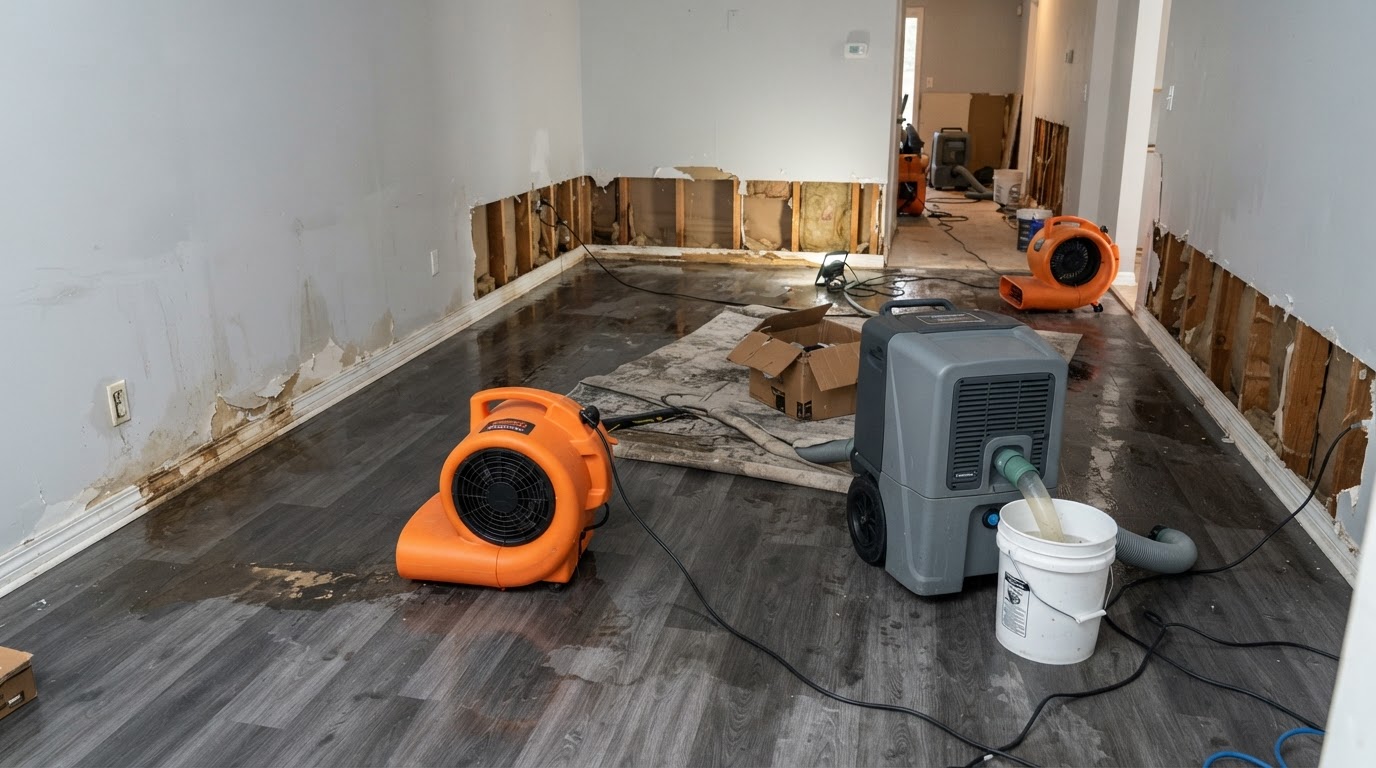
Removing standing water is only the first step. Structural drying uses air movement and dehumidification to draw the remaining moisture out of drywall, framing, subflooring, and other materials after a water loss. Madison Water Damage Restoration provides monitored structural drying for residential and commercial properties in Madison, Alabama.
Need Professional Structural Drying in Madison?
Structural drying is the use of air movers and dehumidifiers, with moisture monitoring, to pull remaining moisture out of building materials after standing water is removed. It targets water held inside drywall, framing, subflooring, and cavities that surface drying cannot reach. Call Madison Water Damage Restoration at (256) 588-8480 for structural drying in Madison, AL.
Why Structural Drying Matters After Water Damage
After extraction, a property can look dry on the surface while materials beneath still hold significant moisture. Structural drying addresses that remaining moisture so it does not continue to affect the building.
Water can remain inside materials long after standing water is gone. Drywall, wood framing, subflooring, and insulation all absorb water and release it slowly. Without drying, these materials stay wet and continue to affect the surrounding structure.
Evaporation from wet materials raises the humidity in the affected space. If that humid air is not managed, moisture can reabsorb into materials or spread to previously dry areas. This is why dehumidification accompanies air movement.
Porous materials hold moisture in ways that surface drying does not address. Hidden moisture inside wall cavities, beneath flooring, and in ceiling spaces can persist because air does not circulate freely in those spaces. Structural drying is designed to reach moisture in these concealed areas.
Does Surface Dryness Mean the Structure Is Dry?
No. A floor or wall that feels dry to the touch can still hold moisture below the surface and inside cavities. Moisture meters read at depth to check what the surface does not show. Structural drying continues until those readings reach dry goals, not until the surface merely feels dry.
How Structural Drying and Dehumidification Work
Structural drying combines air movement, dehumidification, and monitoring. The appropriate setup depends on which materials are wet, how much moisture they hold, and where the moisture is located within the structure.
- 1
Take Moisture Measurements
Moisture meters establish baseline readings in wet materials and the air, identifying which areas need drying and how much moisture each holds.
- 2
Position Air Movers
Air movers create airflow across wet surfaces to encourage evaporation, directed at walls, floors, and into cavities where moisture hides.
- 3
Run Dehumidifiers
Dehumidifiers pull moisture out of the air so evaporated water does not reabsorb into materials or raise humidity in unaffected areas.
- 4
Adjust Equipment Placement
As some materials dry faster than others, equipment is repositioned to focus on areas that remain wet and to maintain balanced drying.
- 5
Monitor Moisture Conditions
Readings are taken over the drying period to track progress. The drying plan is adjusted based on how quickly materials are releasing moisture.
- 6
Confirm Dry Goals
Drying continues until moisture readings in materials and the air reach established dry goals, after which equipment is removed and the area is reassessed.
Water spreading through your property?
Fast action can help reduce additional water damage. Call Madison Water Damage Restoration now for water removal and drying assistance.
Building Materials That May Require Drying
Different materials release moisture at different rates, which is part of why drying is monitored and equipment is adjusted over time rather than set once and left.
Drywall absorbs water from the floor upward and from behind, and can be dried in place when exposure is limited and the material is not compromised. Wood framing and studs hold moisture inside the grain and release it slowly, requiring sustained airflow and dehumidification.
Subflooring beneath finished floors can stay wet long after the surface is dry, and may need sections of flooring lifted so air can reach the subfloor. Flooring materials themselves, including hardwood, laminate, and vinyl, each respond differently and may require different access to dry thoroughly.
Cabinetry, particularly the bases and the voids beneath cabinets, dries slowly because air does not reach inside. Ceiling materials and the cavities above ceilings can hold moisture from above after an upstairs leak. Insulation is evaluated based on its type and condition; some insulation can be dried while saturated insulation may need removal.
Because moisture moves from wetter materials toward drier ones, a material that is not dried thoroughly can re-wet surrounding materials that were already dry. This is why drying is balanced across the affected area rather than focused only on the wettest spot, and why readings are taken in materials and the air together. Monitoring both confirms progress and guides where equipment is repositioned as the drying advances through the structure.
- Drywall and the back of wall surfaces
- Wood framing, studs, and plates
- Subflooring beneath finished floors
- Hardwood, laminate, and vinyl flooring
- Cabinet bases and toe-kick voids
- Ceiling materials and insulation by condition
Related Water Damage Services
Structural drying is the step that follows extraction in most water-loss situations, and it connects to several related services.
Water Extraction
Learn moreRestoration
Learn moreFlood Cleanup
Learn moreCeiling & Wall Drying
Learn moreCommercial Restoration
Learn moreSpecialized Water Damage Problem Pages
Because drying follows water removal, the emergency water removal and water extraction page covers the extraction step that precedes drying. Flood cleanup and roof, ceiling, and wall water damage both lead into structural drying. Serving Madison and surrounding communities such as Huntsville, Athens, and Decatur, the company coordinates these services across the water damage cluster.
The related services and service-area links below connect to the rest of the cluster. Use Contact Us to request structural drying and Home to return to the main site.
Water Damage Restoration FAQs
Direct answers to common questions about this service in Madison, Alabama.
Need Professional Structural Drying?
Surface dryness does not mean the structure is dry. Call Madison Water Damage Restoration at (256) 588-8480 for monitored structural drying and dehumidification in Madison, Alabama.