Bathtub & Shower Overflow Cleanup in Madison, AL
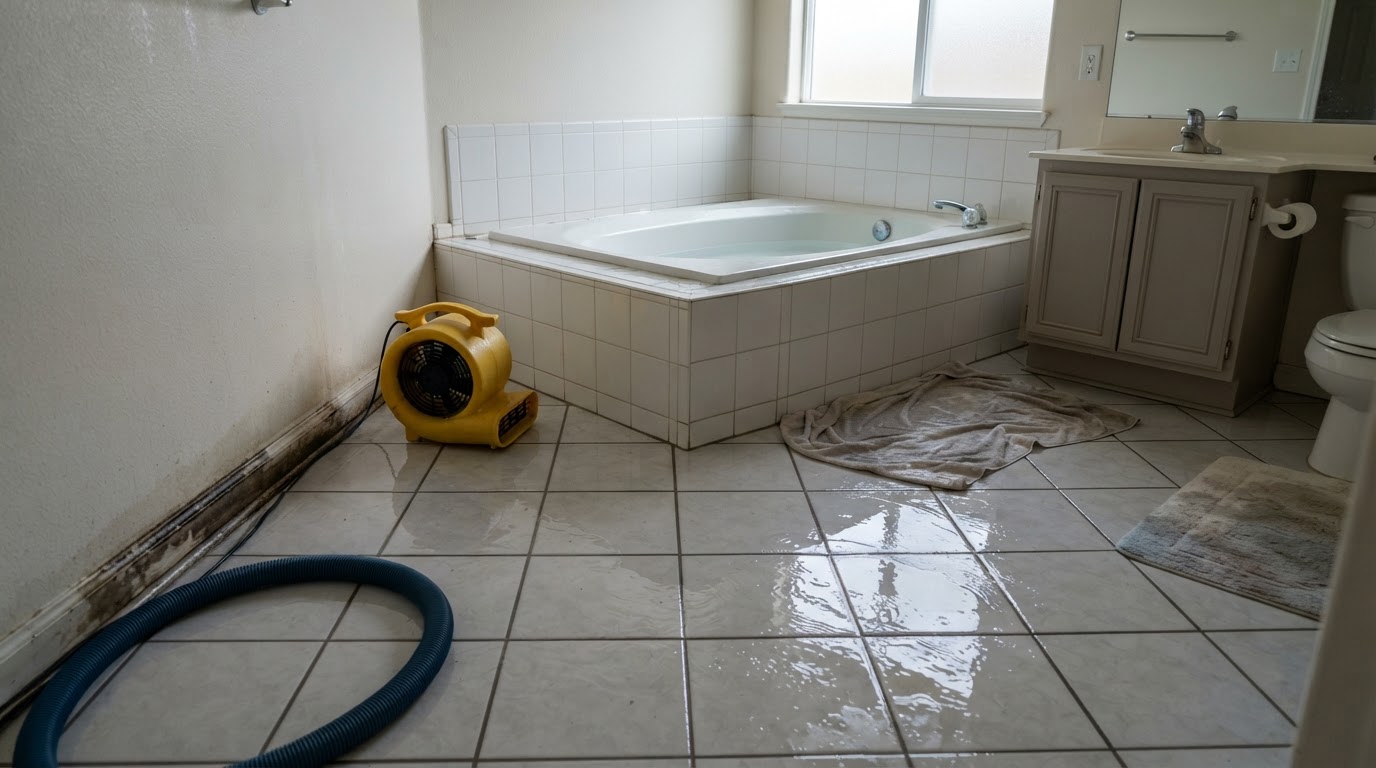
A bathtub or shower overflow can allow water to leave the normal wet area and spread onto bathroom flooring, baseboards, vanity areas, walls, adjacent rooms, and the ceiling below an upstairs bathroom. Madison Water Damage Restoration provides water removal, moisture assessment, and structural drying after bathtub and shower overflows for properties in Madison, Alabama and surrounding communities.
What Should You Do After a Bathtub or Shower Overflows?
Stop the water and clear any blockage if it can be done safely, remove standing water from the floor when practical, and check the ceiling below if the bathroom is on an upper level. Because water can travel beneath bathroom flooring and into wall cavities, professional moisture assessment may be needed even after the visible water is gone. Call (256) 588-8480.
How Bathtub and Shower Overflows Cause Bathroom Water Damage
Bathtub and shower overflows let water leave the containment of the tub or shower pan and spread across surfaces that are not meant to hold standing water.
An overflowing tub is a common source. A drain blocked by soap or hair can cause the tub to fill past the overflow drain, sending water over the rim and across the bathroom floor. Because the water comes from the fixture supply, it is generally clean water, which is different from a toilet or sewage backup.
Shower water escaping containment reaches the floor through gaps at the shower curb, a failed threshold, or water simply directed outside the wet area. From there it runs along the bathroom floor, into the vanity base, behind baseboards, and toward the door threshold and adjacent rooms.
Water that leaves the wet area travels along flooring edges, behind baseboards, and into the vanity area. When the bathroom is on an upper level, water can pass through the floor assembly and appear as a wet spot or drip on the ceiling below. These overflow scenarios are distinct from sewage backups, which involve contaminated water and a different cleanup approach.
- Overfilled tubs and blocked drains
- Shower water escaping containment
- Flooring edges and baseboards
- Vanity bases and door thresholds
- Adjacent rooms through thresholds
- Ceilings below upper-level bathrooms
Can a Bathtub Overflow Damage the Ceiling Below?
Yes. When a bathroom is on an upper level, water from an overflow can pass through the floor assembly and appear as a wet spot, stain, or drip on the ceiling of the room below. Water travels along the subfloor and through penetrations, so the visible ceiling stain may be some distance from the actual path. The ceiling and the floor assembly beneath the bathroom are both checked for moisture.
Bathroom Water Extraction and Drying Near Madison
Restoration moves from source control into water removal, moisture mapping, material evaluation, and controlled drying. The water category and source influence the cleanup approach. Not every property requires every step.
The water category and source influence the cleanup approach. Bathtub and shower overflows are generally clean water from the fixture supply, which is different from a toilet or sewage backup. Where contamination is not a concern, the focus is on water removal and structural drying of affected materials.
- 1
Stop the source
The water is shut off and any blockage is cleared if it can be done safely. The cleanup approach depends on whether the water is from the fixture supply or involves contamination.
- 2
Remove standing water
Extraction equipment pulls water from the bathroom floor, including the areas behind the tub or shower and along the baseboards where it collects.
- 3
Extract water where appropriate
Detail extraction addresses flooring edges, the vanity base, and any water that has traveled toward the door threshold or adjacent rooms.
- 4
Evaluate flooring and adjoining areas
Flooring, subfloor, baseboards, and the vanity base are assessed for moisture. Where the bathroom is upstairs, the ceiling below is also checked.
- 5
Check the ceiling below when applicable
For upper-level bathrooms, the ceiling and floor assembly beneath the bathroom are checked for water that has passed through, since the visible stain may not show the full extent.
- 6
Evaluate drywall and baseboards
Drywall, baseboards, and wall materials are assessed. Some can be dried in place; saturated materials, especially behind the tub or shower, may need removal.
- 7
Dry and dehumidify
Air movers and dehumidifiers are positioned to dry flooring, subfloor, walls, and the ceiling assembly when applicable. Moisture is monitored until readings reach an appropriate dry standard.
Water spreading through your property?
Fast action can help reduce additional water damage. Call Madison Water Damage Restoration now for water removal and drying assistance.
Where Bathroom Overflow Water Can Hide
Water that leaves the tub or shower area follows the lowest path and reaches concealed spaces that a visual inspection can miss.
Under tile systems, where pathways exist, water can travel through grout lines, failed sealant, or the perimeter gap behind fixtures to reach the subfloor. Beneath floating flooring, water seeps through seams and travels outward from the wet area. Intact, well-sealed tile does not always allow water through, so the condition of the installation matters.
Around the toilet and vanity boundaries, water travels along the floor edge and behind baseboards, reaching wall cavities through the gaps where fixtures meet the floor. The subfloor beneath the bathroom absorbs water that passes through these pathways, and ceiling cavities below an upstairs bathroom can receive water that has passed through the floor assembly.
Adjacent carpet or flooring outside the bathroom can absorb water that travels under the door threshold. Because these paths are concealed, the visible puddle rarely shows the full extent. Moisture meters and thermal imaging are used to check beneath flooring, behind baseboards, inside wall cavities, and in the ceiling below before drying is considered complete.
- Under tile systems where pathways exist
- Beneath floating flooring and along seams
- Around toilet and vanity boundaries
- Behind baseboards and into wall cavities
- Subfloor beneath the bathroom
- Ceiling cavities below upper-level bathrooms
- Adjacent carpet or flooring through thresholds
Can Bathroom Flooring Look Dry While Water Is Underneath?
Yes. Water can travel through grout lines, failed sealant, or the perimeter gap behind fixtures to reach the subfloor while the tile surface looks dry. Beneath floating flooring, water seeps through seams and sits against the subfloor. The floor surface can feel dry while moisture remains beneath it, which is why moisture meters check beneath the surface rather than relying on appearance.
Related Water Damage Services
Madison Water Damage Restoration provides bathtub and shower overflow cleanup as part of a broader set of bathroom and water damage services for properties in Madison, Alabama and surrounding communities.
Bathroom Overflow
Learn moreWater Extraction
Learn moreStructural Drying
Learn moreRestoration
Learn moreRelated Water Damage Problems
Bathtub and shower overflows are one of several bathroom water-loss scenarios. The company also handles the broader bathroom water damage cleanup that covers toilet overflows, shower leaks, and fixture failures, as well as water extraction and structural drying for water that has reached adjacent rooms or the ceiling below. Where contamination is a concern, such as a toilet or sewage backup, the sewage cleanup service applies instead.
Madison Water Damage Restoration handles the water cleanup, moisture assessment, and structural drying. Call (256) 588-8480 to request service and describe where the water is, whether it is from the fixture supply, and whether it has reached the ceiling below.
Bathtub & Shower Overflow Cleanup FAQs
Direct answers to common questions about this water damage problem in Madison, Alabama.
Bathtub or Shower Overflowed?
Water from a bathtub or shower overflow travels beneath bathroom flooring and into wall cavities while the surface looks dry. Call Madison Water Damage Restoration at (256) 588-8480 for bathtub overflow cleanup in Madison, Alabama.